

What Size Hydraulic Breaker Do I Need for My Large Excavator? (10 Ton and Above)
- Match your hydraulic breaker to your excavator’s operating weight — always stay within the carrier weight range.
- Rocxbreaker IPS-series hydraulic hammer attachments cover excavators from 11 ton to 48 ton.
- Wrong-size rock breakers cause boom fatigue, hydraulic damage, and can void your machine warranty.
Running a mini excavator under 10 ton? See our companion guide: What Size Hydraulic Breaker Do I Need for My Mini Excavator?
When you’re operating a large excavator, getting the hydraulic breaker size right is critical.
An undersized rock breaker wastes time and wears out fast. An oversized hydraulic hammer can crack your boom and destroy your hydraulic system.
This guide covers Rocxbreaker hydraulic hammer attachments for excavators 10 ton and above.
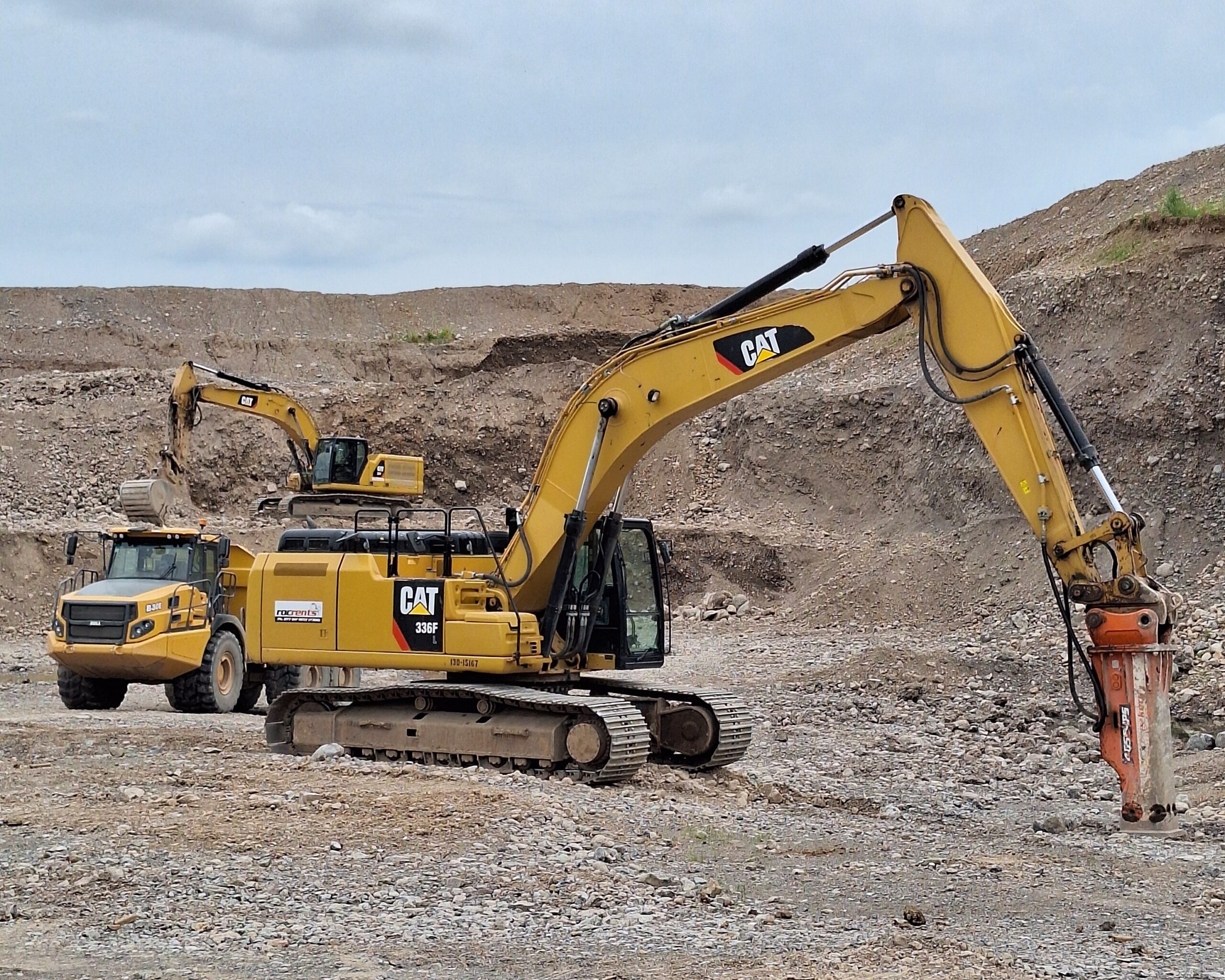
Why Is Carrier-to-Breaker Matching So Important on Large Machines?
Large excavators carry higher hydraulic pressure and more machine weight.
That means sizing errors have bigger consequences. An oversized hydraulic breaker on a large carrier transfers massive shock loads into the boom and stick. Over time, this causes fatigue cracks and structural failure.
An undersized rock breaker simply cannot deliver the impact energy needed. It cycles too fast and wears out its internal components quickly.
The right hydraulic hammer attachment for a large excavator delivers:
- Sustained impact energy through long production shifts
- Protection of the boom, stick, and hydraulic system
- Maximum tool (chisel) life in hard rock and reinforced concrete
- Compliance with machine warranty requirements
- A safer, more productive jobsite
Summary: On large excavators, matching hydraulic breaker size to carrier weight protects a major capital investment.
What Should I Check Before Choosing a Large Excavator Hydraulic Breaker?
What is your excavator's operating weight?
Use the actual operating weight — with standard attachments and full fuel. Do not use base machine weight alone.
Compare your operating weight to the hydraulic breaker’s carrier weight range.
What hydraulic flow and pressure does your machine produce?
Large excavators produce significantly higher hydraulic output than mini machines. Check auxiliary flow (GPM) and working pressure (PSI) on your spec sheet.
The hydraulic hammer must fall within your machine’s output range — not just below the maximum.
How hard is the material you are breaking?
Granite, basalt, and reinforced concrete require high impact energy. Softer materials like sandstone or general fill need less.
Always spec your hydraulic breaker for the hardest material on your site.
How long will the hydraulic breaker run each shift?
Mining and quarry operations often run rock breakers at near-continuous duty. Choose a hydraulic hammer rated for high duty cycle if you plan long daily use.
Does the attachment fit your coupler and stick?
Confirm bracket pin sizing and coupler compatibility for your specific excavator make and model. Call our team to confirm fitment before ordering.
Summary: Check operating weight, hydraulic flow, material hardness, duty cycle, and coupler fitment before selecting a rock breaker.
Which Rocxbreaker Hydraulic Hammer Fits My Large Excavator?
The table below shows our IPS-series hydraulic breaker attachments for excavators 10 ton and above.
Model | Carrier Size | Impact Energy | Ideal Applications | Compatible Machines |
1850IPS | 11–16 ton | 3,098 ft-lbs | Rock excavation, pipeline trenching, structural demolition | Cat 313/315/317, Link Belt 145, John Deere 135, Volvo ECR145 |
2650IPS | 16–26 ton | 5,000 ft-lbs | Quarry work, road building, industrial demolition | Cat 320/323/325, Link Belt 210/250, John Deere 210/250, Volvo EC220 |
3050IPS | 25–32 ton | 3,098 ft-lbs | Bridge decks, thick concrete, rock excavation | Cat 320/323/325, Link Belt 210/250, John Deere 210/250, Volvo EC220 |
4050IPS | 32–36 ton | 7,966 ft-lbs | Quarry, mining, and deep foundation work | Cat 330/335/336, John Deere 345/350, Volvo ECR355, Komatsu PC360 |
4650IPS | 40–48 ton | 8,851 ft-lbs | Mining, deep excavation, industrial demolition | Cat 349, John Deere 470, Komatsu PC490 |
Summary: Rocxbreaker IPS-series hydraulic hammer attachments cover carrier weights from 11 ton up to 48 ton.
Which Rock Breaker Fits My Specific Machine?
Here are common large excavator matchups:
- Cat 313/315/317, Volvo ECR145, John Deere 135 (11–16 ton): The 1850IPS delivers 3,098 ft-lbs. Use it for pipeline trenching through rock and structural demolition.
- Cat 320/323/325, Volvo EC220, John Deere 210/250 (16–26 ton): The 2650IPS steps up to 5,000 ft-lbs for quarry work and heavy road building.
- Cat 320/323/325, John Deere 210/250 in heavier configuration (25–32 ton): The 3050IPS handles bridge deck demolition and thick reinforced concrete.
- Cat 330/335/336, Komatsu PC360, Volvo ECR355 (32–36 ton): The 4050IPS at 7,966 ft-lbs is built for quarry production and deep foundation work.
- Cat 349, John Deere 470, Komatsu PC490 (40–48 ton): The 4650IPS delivers 8,851 ft-lbs — our highest impact energy model for mining and industrial demolition.
Summary: Use this list to quickly identify the correct Rocxbreaker hydraulic breaker for your excavator model.
Frequently Asked Questions About Large Excavator Hydraulic Breakers
What is the difference between the IP and IPS series?
The IP series covers Rocxbreaker hydraulic hammer attachments for mini excavators up to around 12 ton.
The IPS series is our heavy-duty range for excavators from 11 ton and above. There is some overlap at the 8–12 ton range. Call us to confirm the best fit for your specific machine and application.
How do I check if my excavator's hydraulic system can support a large hydraulic breaker?
Find your auxiliary hydraulic flow (GPM) and maximum working pressure (PSI) on your excavator’s spec sheet.
Compare both values against the hydraulic hammer’s required operating range. Running outside that range — too high or too low — accelerates internal wear and causes premature failure.
Can the same rock breaker be used for both rock and concrete?
Yes. The same hydraulic breaker handles both rock and concrete. Your choice of chisel type matters too.
Use a moil point chisel for rock. Use a flat chisel for concrete slabs and asphalt.
How often should I grease a large hydraulic hammer?
As a general guide, grease every 2–4 hours of operation under normal conditions. High duty cycle applications may require more frequent greasing.
Always follow the Rocxbreaker maintenance schedule for your specific model.
Does the hydraulic breaker come with a warranty?
Yes. Contact the Rocxbreaker team for warranty terms on your specific model.
Using the correct carrier weight class and hydraulic specifications is required to maintain warranty coverage — another reason to get sizing right from the start.
Ready to Find the Right Hydraulic Breaker for Your Large Excavator?
The Rocxbreaker team can match the right hydraulic hammer to your machine, application, and job schedule.
Call us: +1 877-617-7368 | Mon–Fri, 7 AM – 5 PM
Email: sales@rocxbreaker.com
Visit: rocxbreaker.com
Running a machine under 10 ton? See our companion guide: What Size Hydraulic Breaker Do I Need for My Mini Excavator?