

Why Are Hydraulic Breakers Essential Equipment in Mining Operations?
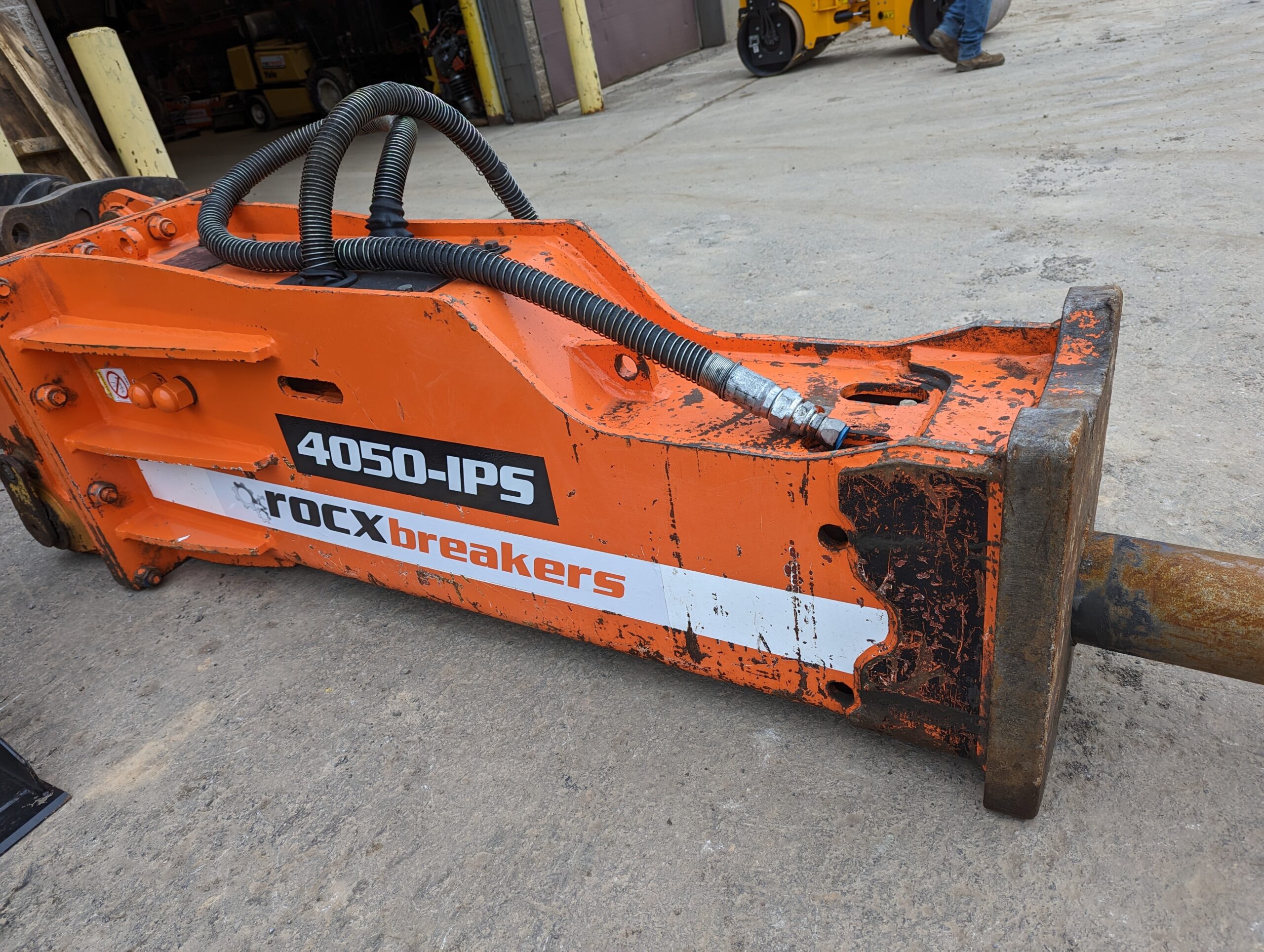
TL;DR: Hydraulic breakers are essential in mining because they break down oversized rock and ore that can’t be processed or hauled as-is, without the cost and safety risk of secondary blasting. Heavy-duty breakers like the 4050IPS and 4650IPS are built for the sustained impact energy, high operating pressure, and continuous duty cycles that mining applications demand.
What Problem Do Hydraulic Breakers Solve on a Mine Site?
Blasting doesn’t always break rock down to a usable size. Oversized boulders, known as oversize or toe rock, are common after a blast and can’t go straight into a crusher or onto a haul truck.
Without a way to reduce that oversize material, crews either re-drill and re-blast it, which is slow and costly, or crushers jam and haul trucks run under capacity.
- Secondary breaking: hydraulic breakers reduce oversize rock to a size that fits crushers, screens, and haul trucks.
- Face and bench work: breakers clean up loose or unstable material along a bench face without additional blasting.
- Pit and quarry maintenance: breakers clear blocked chutes, hoppers, and grizzly screens where material bridges or jams.
Why Not Just Blast More Instead of Using a Breaker?
Blasting is efficient at scale, but it isn’t precise, and it carries costs a breaker doesn’t.
- Cost per blast: drilling and explosives add up fast when the goal is only to break down a handful of oversized rocks.
- Safety exposure: every blast event means clearing personnel and equipment from the area, which stops other work on site.
- Vibration and flyrock control: blasting near infrastructure, haul roads, or property boundaries raises regulatory and safety concerns that a breaker avoids.
A hydraulic breaker lets crews reduce rock on demand, without scheduling around a blast cycle.
What Makes a Breaker Suited for Mining Duty Cycles?
Mining applications run breakers harder and longer than most construction jobs, so the equipment has to hold up to continuous, high-impact use.
- Higher impact energy: mining-duty breakers deliver more force per blow to break down hard, dense rock efficiently.
- Higher operating pressure and flow: these breakers are built to run at the higher pressure and flow rates large mining excavators supply.
- Reinforced housings: abrasive rock and constant vibration demand tougher wear plates and shock-absorbing mounts.
RocxBreaker’s 4050IPS and 4650IPS models are built for this class of work, matched to 32 to 48 ton carriers with impact energy in the 7,966 to 8,851 ft-lbs range.
Where on a Mine Site Do Breakers Get Used Most?
- Primary and secondary breaking of oversize rock and boulders after a blast
- Clearing blocked crusher feeders, hoppers, and grizzly screens
- Bench and face scaling to remove loose or unstable rock
- Trenching and excavation for haul roads and site infrastructure
- Demolition of old foundations, footings, or structures during site redevelopment
How Do You Choose the Right Breaker Size for a Mine Site?
Breaker selection in mining follows the same principle as any other application: match the breaker to the carrier’s weight class and hydraulic capacity.
- Undersized breakers stall against dense ore and hard rock, driving up cycle time and wearing out faster.
- Oversized breakers can overload a carrier that isn’t rated for the hydraulic flow and pressure the breaker needs.
For most large mining excavators, the 3050IPS, 3650IPS, 4050IPS, and 4650IPS cover the range from heavy secondary breaking up through the largest carriers on site. Smaller breakers still have a place for lighter cleanup and infrastructure work around the pit.
What Maintenance Keeps a Mining Breaker Running?
Mining environments are harder on equipment than most other applications, so maintenance intervals matter even more.
- Grease the tool bushing at the start of every shift, and more often during continuous high-cycle use
- Check tool retainer pins and bushings for wear, since abrasive rock accelerates wear faster than soil or concrete
- Inspect hydraulic hoses and fittings regularly given the vibration and dust exposure typical on a mine site
- Match the tool tip (moil point, chisel, or blunt) to the rock type being broken
Frequently Asked Questions
Can a hydraulic breaker fully replace blasting on a mine site?
No. Breakers are best suited to secondary breaking and cleanup work, not primary rock removal at scale. Most mine sites use blasting for bulk extraction and breakers for oversize reduction, face cleanup, and maintenance tasks.
How often does a mining-duty breaker need maintenance compared to construction use?
Mining duty cycles run longer and harder, so grease intervals and wear-part inspections should happen more frequently than on a typical construction site. Daily greasing and regular bushing checks are standard practice.
What size breaker do I need for secondary breaking on a large haul-class excavator?
Most large mining excavators pair with the 3050IPS through 4650IPS range, depending on carrier weight and the density of the rock being broken. Our team can confirm the right fit for your specific machine.
Not sure which model fits your excavator and your site?
Browse the full lineup at rocxbreaker.com or reach out to our team for a recommendation based on your machine and application.
Call us: +1 877-617-7368