

Using Hydraulic Breakers for Pipeline Trenching: Best Practices and Benefits
TL;DR: Hydraulic breakers speed up pipeline trenching by fracturing rock, frost-hardened ground, and old pavement that standard buckets cannot dig through. Matching breaker size to trench width and excavator class, working in short controlled cycles, and protecting the trench walls are the keys to safe, efficient production. Mid-weight breakers (450IP through 1850IPS) cover most utility and pipeline trenching work, while larger IPS-series breakers handle rock-heavy right-of-way sections.
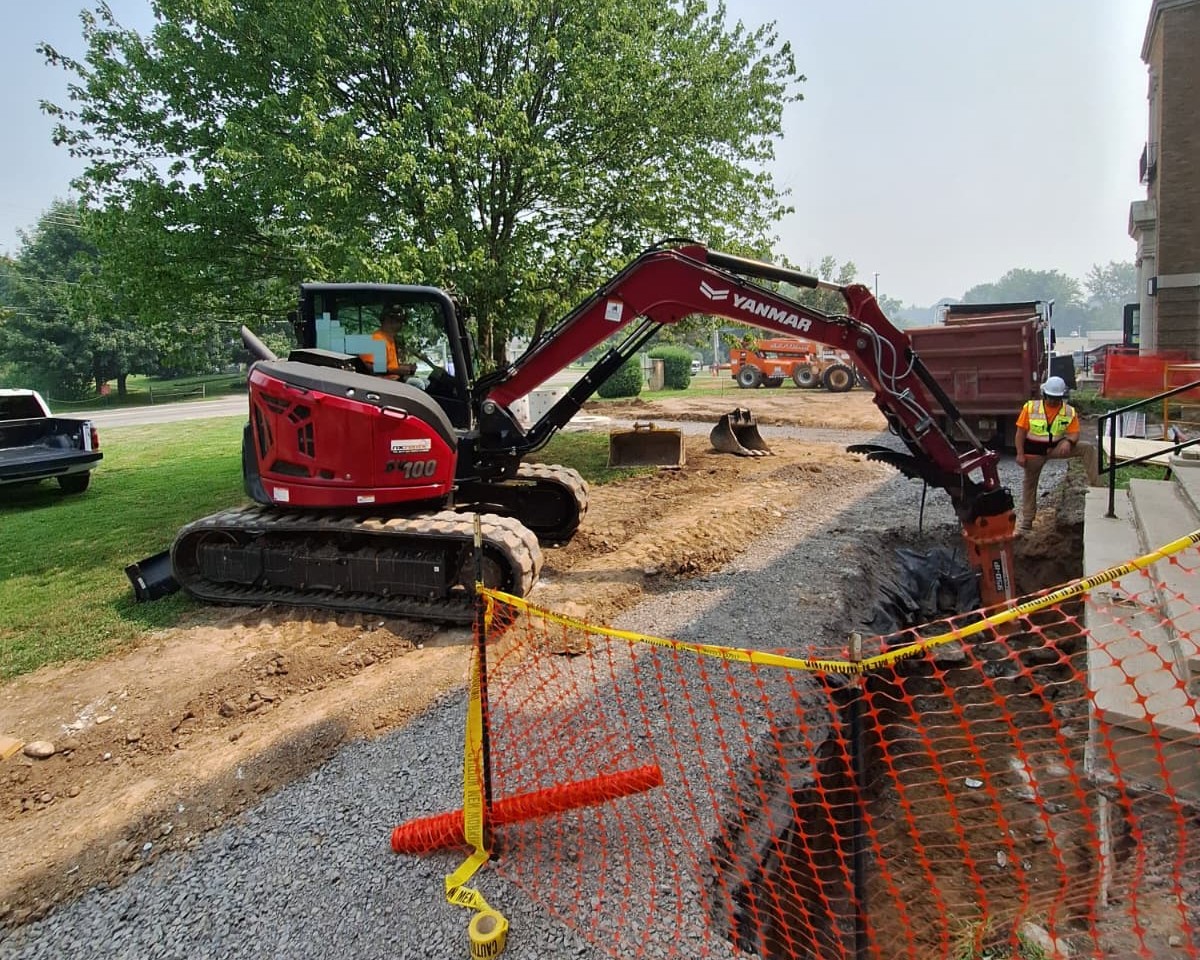
Why Use a Hydraulic Breaker for Pipeline Trenching?
Pipeline routes rarely follow soft, uniform ground for their full length. Crews regularly hit conditions a bucket cannot move through on its own.
- Rock ledges and boulders along the right-of-way that block bucket digging
- Frost-hardened ground in winter trenching seasons
- Old pavement, curb, or foundation debris crossing the route
- Caliche or hardpan layers common in utility corridors
A breaker clears these obstructions in place, so the crew can keep advancing the trench instead of rerouting or bringing in specialized rock excavation equipment.
How Does Trench Width Affect Breaker Selection?
Pipeline trenches are narrower than open excavation cuts, and that changes which breaker fits the job.
- Narrow utility trenches (under 24 inches): smaller breakers like the 250IP or 350IP fit the confined width without oversizing the excavator
- Standard pipeline trenches (24 to 36 inches): 450IP through 750IPH breakers give enough impact energy for rock and hardpan without crowding the trench walls
- Wide transmission line trenches (36 inches and up): 950IP and larger IPS-series breakers handle sustained rock removal over longer trench sections
A breaker too wide for the trench cannot get proper reach or a clean strike angle, which slows the job and increases wear on the tool.
What Ground Conditions Call for a Larger Breaker?
Ground conditions along a pipeline route can change section by section, so crews often need more than one breaker class on the same job.
- Light rock and hardpan: mid-weight breakers (450IP, 450PSL, 750IP) cycle through these conditions efficiently
- Heavy rock or solid ledge: 950IP through 2650IPS breakers deliver the sustained impact energy needed to keep advancing production
- Mixed rock and soil: matching the breaker to the toughest section of the route, rather than the average condition, keeps the crew from swapping tools mid-trench
How Do You Protect the Trench and Nearby Utilities?
Pipeline work often runs close to existing utilities, roadways, and structures, so breaker operation has to account for what is nearby.
- Keep a safe working distance from known utility lines and confirm locates before breaking near marked corridors
- Use shorter, controlled strike bursts near existing infrastructure instead of continuous hammering
- Watch trench wall stability, since repeated impact near the wall can loosen material and increase cave-in risk
- Position the carrier so the breaker strikes straight into the material, not at an angle, to reduce side load on the trench wall
What Are the Production Benefits of Using a Breaker Over Alternative Methods?
Compared to blasting, hand tools, or swapping to specialized rock excavation equipment, a hydraulic breaker mounted on the trenching excavator keeps the crew on one machine and one workflow.
- No permitting or standoff distance required, unlike blasting
- No mobilization of separate rock-cutting equipment
- Faster restart after hitting an obstruction, since the breaker attaches to the same carrier already on site
- Better control over trench alignment, since the crew is not working around blast patterns or rerouted equipment
How Do You Maintain a Breaker Through a Long Pipeline Run?
Pipeline jobs often run for weeks or months across varied ground, so maintenance intervals matter more than on short-duration work.
- Grease the tool bushing at the start of every shift, and more often in rock-heavy sections
- Check tool retainer pins for wear, since rock and hardpan accelerate wear faster than soil
- Inspect hydraulic hose connections and fittings on a set schedule, not just when a problem shows up
- Match the tool tip (moil point for rock, chisel for hardpan and frost) to the ground condition in that section of the route
Frequently Asked Questions
Can the same breaker handle both trenching and general excavation work on a pipeline job?
Yes, within its rated size class. A breaker sized for the rock and hardpan sections of a pipeline route will also handle general trenching and grading duties on the same excavator.
What size breaker do I need for a standard utility trench?
Does trenching in frozen ground require a different breaker than rock trenching?
Frost-hardened ground generally needs less sustained impact energy than solid rock, so a mid-weight breaker with a chisel tip is often enough where a heavier IPS-series breaker would be needed for continuous rock.
Not sure which model fits your excavator and your pipeline route?
Browse the full lineup at rocxbreaker.com or reach out to our team for a recommendation based on your machine and application.
Call us: +1 877-617-7368