

From Roadwork to Quarrying: A Complete Guide to Hydraulic Breaker Applications
TL;DR: Hydraulic breakers cover a wide range of jobs beyond concrete demolition, including roadwork, utility trenching, land clearing, and quarry production. The right breaker for each application depends on excavator class, material type, and how continuous the cycle needs to be. Lighter breakers (250IP through 750IPH) handle roadwork and residential-scale jobs, while heavier IPS-series breakers are built for quarrying and high-volume rock production.
What Roadwork Applications Call for a Hydraulic Breaker?
Road construction and repair regularly run into material that standard attachments cannot move efficiently.
- Breaking up old asphalt and concrete pavement during resurfacing projects
- Removing curb, gutter, and sidewalk sections ahead of regrading
- Clearing rock and hardpan encountered during roadbed excavation
- Trenching for drainage and utility lines along the right-of-way
Mid-weight breakers in the 450IP to 950IP range cover most roadwork, since pavement and roadbed material rarely requires the sustained impact energy of structural demolition or quarry rock.
How Are Hydraulic Breakers Used in Utility and Pipeline Work?
Utility crews use breakers to keep trenching production moving when rock, hardpan, or old infrastructure blocks the route.
- Rock ledges and boulders along trench alignments
- Frost-hardened ground during winter installation seasons
- Old foundation or pavement debris crossing the trench path
- Narrow trench conditions that call for a breaker sized to the trench width rather than the excavator’s full capacity
Smaller breakers like the 250IP and 350IP fit narrow utility trenches, while 450IP through 750IPH breakers handle wider transmission and pipeline trenches.
What Role Do Breakers Play in Land Clearing and Site Prep?
Land clearing projects often uncover buried material that has to be broken up before grading can continue.
- Buried rock and old foundations left from prior structures
- Tree stumps and root balls anchored in rocky or compacted soil
- Old slab or footing remnants on redevelopment sites
- Compacted fill material that resists standard digging
Breakers in the 450IP through 950IP range handle most land clearing work, with larger breakers stepping in on sites with heavy buried concrete or bedrock.
How Are Hydraulic Breakers Used in Quarrying and Aggregate Production?
Quarrying is one of the most demanding applications for a hydraulic breaker, since the work is continuous and the material is solid rock rather than manufactured concrete.
- Secondary breaking of oversized rock after primary blasting
- Reducing boulders to a size that fits crushers and haul trucks
- Working rock faces where blasting is not practical or permitted
- Clearing rock jams in crusher feed areas
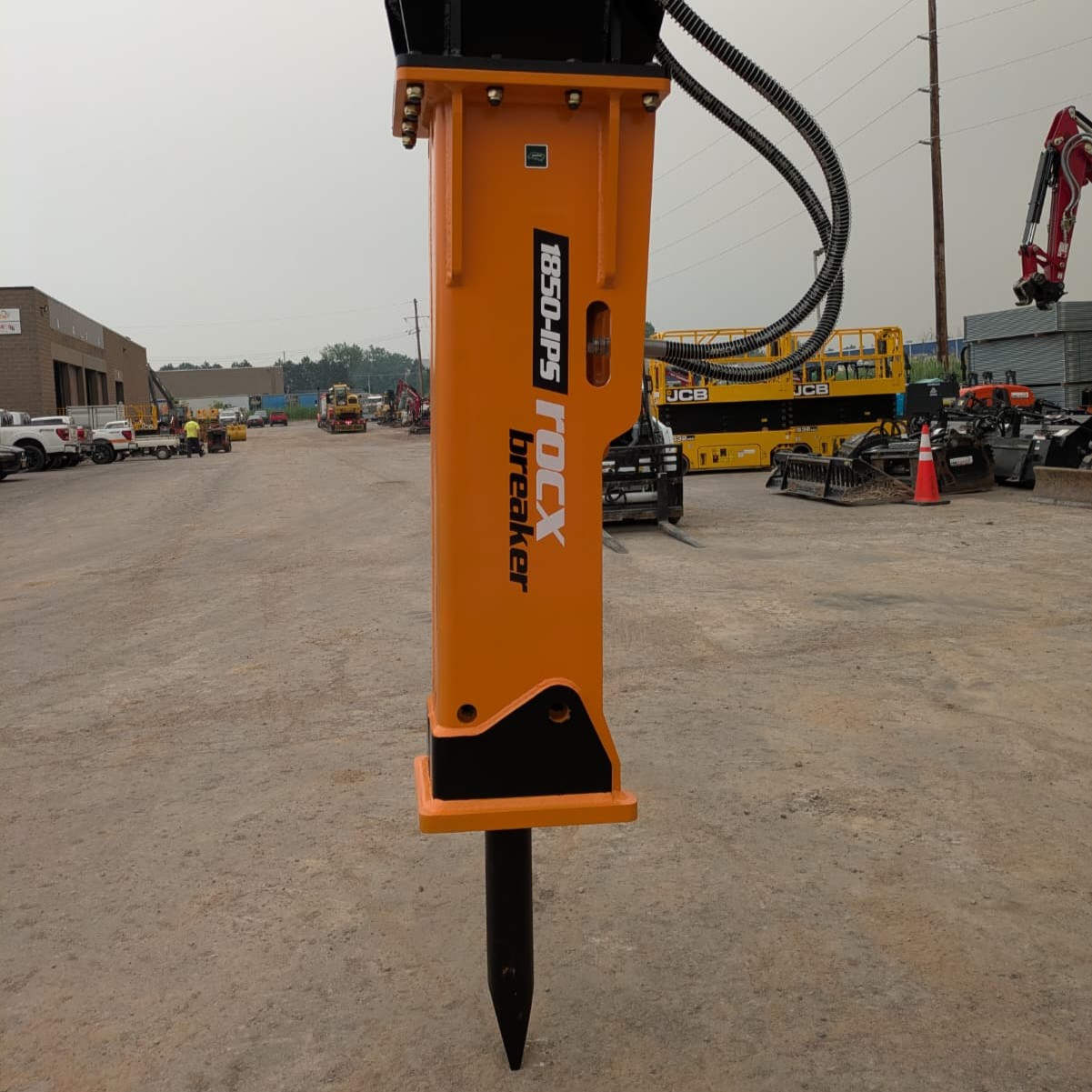
Quarry work generally calls for the largest breakers in the lineup. 1850IPS through 4650IPS breakers are built for the sustained, high-frequency impact cycles that quarry production demands.
How Should Excavator Class Guide Application-Specific Breaker Choice?
Across every application, the excavator’s weight class sets the ceiling for which breaker can be used safely and effectively.
- Mini excavators (up to 8 tons): 250IP through 750IPH, suited to roadwork, utility trenching, and light land clearing
- Standard excavators (8 to 25 tons): 950IP through 2650IPS, suited to heavier roadwork, land clearing, and entry-level quarry work
- Large excavators (25 tons and up): 3050IPS through 4650IPS, suited to structural demolition and high-volume quarry production
Oversizing a breaker for the carrier stresses the boom and undercarriage regardless of application. Matching breaker class to excavator class first, then adjusting for material type, keeps the equipment running at its rated life.
What Maintenance Differences Matter Across Applications?
Continuous rock work in a quarry puts different strain on a breaker than the intermittent cycles typical of roadwork or land clearing.
- Quarry and high-cycle applications need more frequent bushing greasing and tool retainer inspection than intermittent jobs
- Roadwork and utility trenching expose the breaker to more debris and grit, which accelerates wear on seals and pins
- Tool tip selection (moil point, chisel, or blunt) should match the material in each application rather than defaulting to one tip across every job
Frequently Asked Questions
Can one breaker be used across multiple applications, or does each job need a different model?
Within its rated size class, one breaker can cover multiple applications. A 750IP used for roadwork will also handle land clearing and light utility trenching on the same excavator, as long as the material stays within the breaker’s rated impact energy.
What breaker size is typical for quarry secondary breaking?
Most quarry secondary breaking work uses IPS-series breakers in the 1850IPS to 4650IPS range, sized to the excavator and the volume of oversized rock produced by the primary blast.
Do roadwork and quarrying require different tool tips?
Yes. Roadwork typically uses chisel tips suited to pavement and hardpan, while quarry rock work generally calls for moil points built to withstand sustained impact on solid rock.
Not sure which model fits your excavator and your application?
Browse the full lineup at rocxbreaker.com or reach out to our team for a recommendation based on your machine and application.
Call us: +1 877-617-7368